• Skip to main content
  • Skip to primary navigation
  • Login
Midwest Premier League

Midwest Premier League

  • News
  • 2026 Schedule/Standings
  • Historical Standings
  • Clubs
    • Gateway Conference – East Division
    • Gateway Conference – West Division
    • Great Lakes Conference – East Division
    • Great Lakes Conference – West Division
    • Heartland Conference – Division 1
    • Heartland Conference – Division 2 – Group A
    • Heartland Conference – Division 2 – Group B
  • About
    • About League
    • League Leadership
    • League Partners
    • Login
EXPANSION INTEREST FORM

Garrett Pog

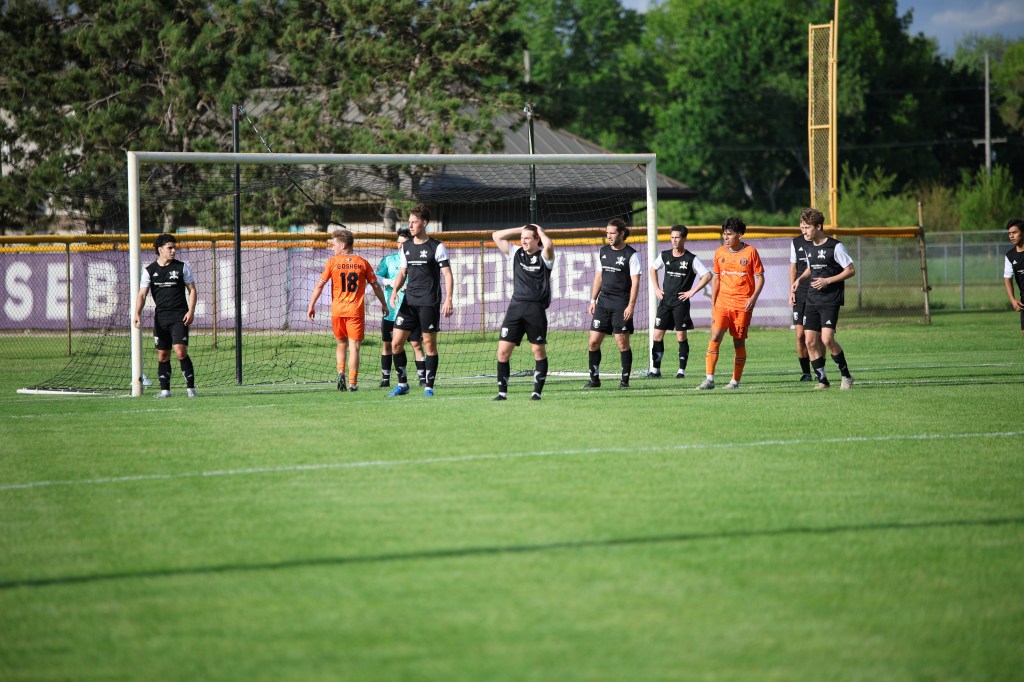
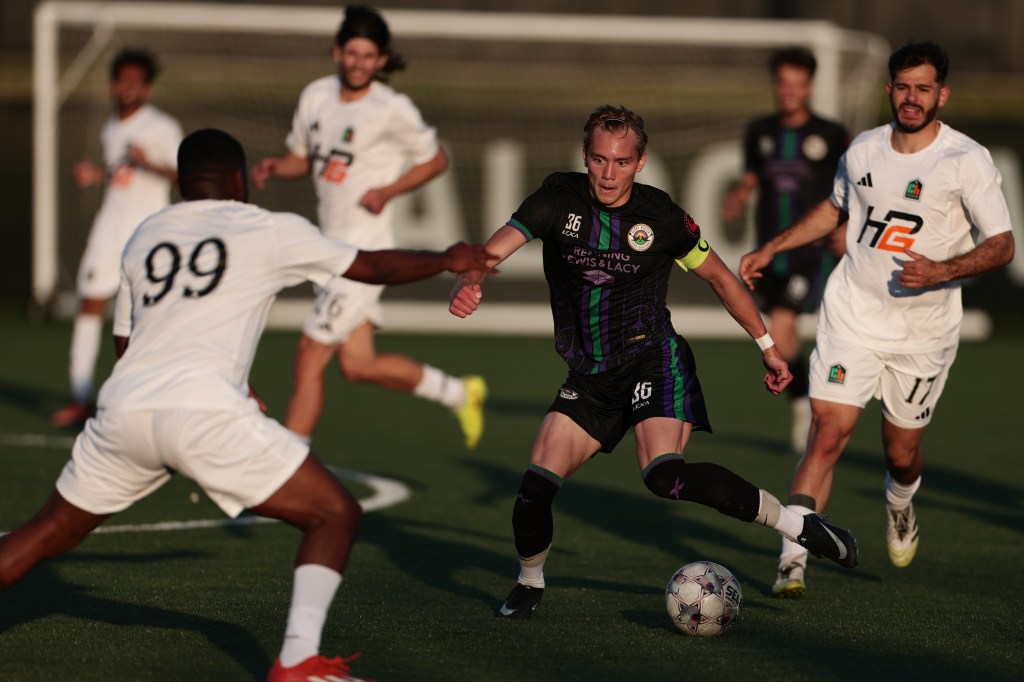
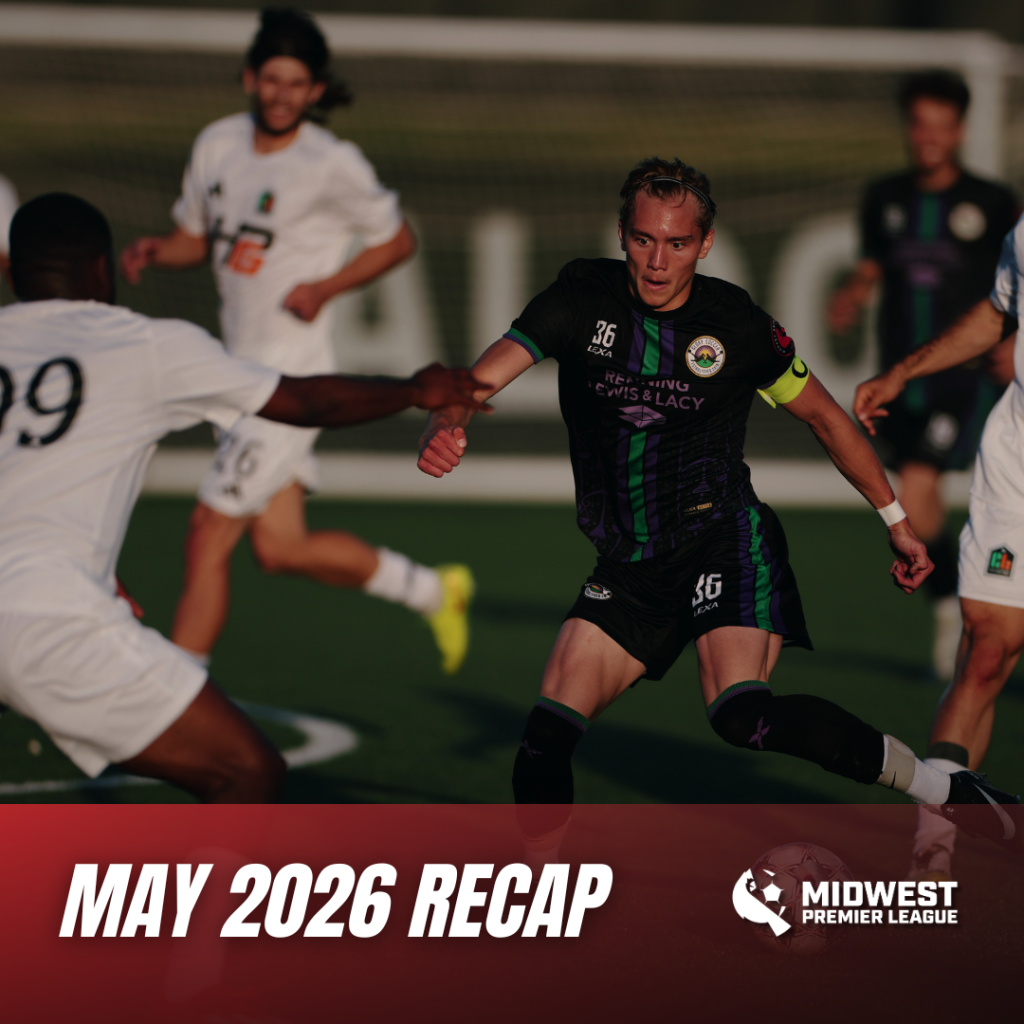
May 2026 Recap

The 2026 Midwest Premier League season is already delivering drama and intrigue, with May producing some stunning results across all six divisions. New frontrunners have emerged, familiar names are making their presence felt, and the battles at both ends of the table are heating up fast. From lopsided scorelines in the Gateway to closely contested affairs in the Heartland, the opening month has set the stage for what promises to be a captivating summer campaign.


Gateway Conference

Gateway East Division

The Gateway East has wasted no time establishing itself as one of the most unpredictable divisions in the league, with 11 clubs producing a dizzying array of results through May. Leading the way are St. Louis Scott Gallagher, who have looked nothing short of dominant in their first two matches. A staggering 9-0 dismantling of 314 Soccer Club on May 16th followed up their opening shutout, and with 13 goals scored and none conceded, they sit atop the division with a perfect six points and a goal difference that speaks for itself.

Breathing down their necks is BOHFS St. Louis, who have shown both firepower and resilience across three games. Their campaign opened with a thumping 6-0 victory over 314 Soccer Club, and despite being held to a 2-2 draw by United Capital City Athletic and a 3-3 stalemate away at Pearl City SC late in the month, they sit on five points with the best goal difference of any team outside Gallagher. Southeast Soccer Academy have also made an early impression, picking up four points from two matches including a 4-2 win over FC Kirkwood, while St. Louis Development Academy announced themselves in style with a 2-0 away victory over United Capital City Athletic on May 31st, their first match of the season yielding all three points.

United Capital City Athletic sit level with SESA on four points, though their results have been mixed. They earned a creditable draw against BOHFS before being beaten twice by Ehtar Belleville and STLDA. Ehtar Belleville FC themselves have had a rollercoaster month, collecting three points after a 6-1 thrashing of FC Kirkwood but suffering a 2-1 home loss to United Capital City. At the foot of the table, 314 Soccer Club have endured a painful introduction to the season, conceding 18 goals in four matches while managing just one draw to show for it, while FC Kirkwood and Pearl City SC are still searching for consistency as the division takes shape.

Gateway West Division

The Gateway West has produced one of the more competitive early-season stories of the entire league, with four clubs locked level on six points at the top heading into June. AFC Columbia, First City FC, Woodland FC, and Great Plains FC are all sitting on 2 wins through their respective games played, though each has also tasted defeat at least once with the exception of Woodland FC, keeping the standings tightly bunched.

AFC Columbia have been the most eye-catching of the group, bookending May with a 3-0 road loss to Woodland FC on May 17th but responding emphatically with a 10-0 demolition of Southside FC on May 30th, a result that announced their attacking intent in no uncertain terms. Woodland FC have been quietly impressive with back-to-back wins, including that victory over Columbia and a home defeat of First City FC on May 27th. First City FC opened the month strongly with wins over Southside FC and Union KC before falling to Woodland, while Great Plains FC have been steady if unspectacular, grinding out a 2-1 win over Southside and a 2-0 victory over Union KC either side of a 3-1 defeat to Columbia in the opener. Union KC and Southside FC are yet to register a point, with Southside having conceded an alarming 16 goals in three matches, the 10-0 defeat to Columbia being the defining low point of their month.


Great Lakes Conference

Great Lakes East Division

The Great Lakes East has seen a fascinating shift in the standings through May, with FC Pontiac and Oakland County FC emerging as the early pacesetters. Pontiac have made a perfect start, winning both of their matches, including a gritty 3-2 opening night win away at Futsal Factory Academy on May 15th, followed by a comfortable 4-1 home victory over the same opposition a week later. With six points from just two games and a positive goal difference of four, they sit joint top and have games in hand on most of their rivals.

Oakland County FC join them on six points from three matches, though their campaign has been more turbulent. After opening with a convincing 3-0 win over Legends FC, they were beaten 5-3 by Michigan Development Academy on May 31st, a result that could prove significant as the season progresses. Michigan Development Academy have been one of the division’s more intriguing sides, drawing 2-2 with Michigan Jaguars FC in their opener before falling to Oakland County and then delivering that remarkable comeback win to finish May. Toledo Villa FC and Cedars FC have each played once and won convincingly, Toledo’s 6-0 demolition of Legends FC on May 31st and Cedars’ 2-0 victory over the same side earlier in the month Both will be looking to build on those strong starts when their schedules catch up. At the other end of the table, Legends FC have endured a miserable opening to the season, losing all three of their matches without scoring a single goal.

Great Lakes West Division

Last year’s early pace-setter Goshen City FC finds itself in a familiar position near the top of the table, but it is Midwest United FC who lead the Great Lakes West after a busy and successful month. Midwest United collected seven points from four matches, a tally that reflects their consistency, and sealed an important 3-1 home win over Goshen on May 29th to stake a genuine claim at the summit. That win over Goshen was a significant scalp, as the Indiana-based side had looked formidable through their first two outings, hammering Holland Rovers 4-0 on the opening weekend before following up with a 2-1 victory over 1927SC on May 23rd.

Goshen sit second on six points, while 1927SC, Lansing Common FC, and Tulip City United SC are all level on four points and very much in the hunt. Lansing Common, who reached the top of the table at various points during the 2025 season, played 1927SC to a 1-1 draw in their home opener with an equalizing goal on the final kick of the game. Lansing followed that up with a 2-0 road win over Midwest United. Tulip City United earned a share of points in a 0-0 draw against Midwest United before beating Grand Rapids SC 2-1 on May 23rd. Holland Rovers have struggled for consistency, winning only once in three matches, and sit a point behind the mid-table cluster. Grand Rapids SC remain winless after three games and will need to turn things around quickly in a division that is showing no signs of slowing down.


Heartland Conference

Heartland Division 1

Cedar Rapids Inferno have hit the ground running in the 2026 Heartland Division 1 campaign, and through May they look every bit like a team with a point to prove. Three matches, three wins, ten goals scored, none conceded, the Inferno’s record is as clean as their defensive sheet. A 4-0 victory over AFC Roscoe on May 16th set the tone, before further wins over Green Bay Glory and Edgewater Castle FC, including another 4-0 result against Edgewater on May 30th, cemented their place at the top of the table with a perfect nine points.

Bavarian United SC have been perhaps the division’s most emphatic performers outside of Cedar Rapids, racking up a 6-0 thrashing of AFC Roscoe on May 25th to go alongside a draw and a 3-1 win over Green Bay Glory on May 31st. Their seven points leave them well-placed in second, with a goal difference of plus eight underlining their attacking quality. Edgewater Castle FC sit in third on four points after an encouraging opening win over AFC Roscoe, though consecutive defeats to Cedar Rapids have tempered expectations somewhat. Green Bay Glory have had a difficult month, winning only once, a narrow 1-0 victory over Chicago House AC, and losing twice to the division’s top two. Chicago House AC have played just once and lost, while AFC Roscoe have been the division’s punching bag so far, conceding 13 goals in three matches without registering a point. With Chicago House’s postponed fixture against Roscoe still to be rescheduled, the division’s shape could yet shift further.

Heartland Division 2 – Group A

Group A of Heartland Division 2 has produced some of the most decisive scorelines of the month, with Steel City FC and Czarni Jaslo establishing themselves as the early frontrunners in what is shaping up to be an intriguing promotion battle. Steel City have recorded back-to-back wins, opening with a 5-1 dismantling of FC Select before closing out May with a 4-2 victory over the same opponents on May 31st. Czarni Jaslo have been equally clinical, keeping back-to-back clean sheets, beating AAC Eagles 1-0 and then delivering a dominant 3-0 result in the rematch on May 27th. Both sides sit level on six points, with the head-to-head between them set to be a pivotal fixture.

Berber City FC join the early contenders with a 2-0 win over JaHbat FC earning them three points from their only match so far, while AAC Eagles sit level on three points despite having played three times, their only win a 5-3 victory over Sueno FC in the opening round. At the foot of the table, FC Select, JaHbat FC, and Sueno FC are all without a point.

Heartland Division 2 – Group B

Group B has been more tightly contested than its counterpart, with Chicago Soccer Academy emerging as the group’s early leaders after an unbeaten start. Three matches, two wins and a draw, ten goals scored, the Soccer Academy have been the group’s most productive side and sit top on seven points. Their most dramatic result came in a 4-2 home victory over River Light FC on May 16th, and they followed that with wins over River Light FC away and a hard-fought 3-3 draw at home to RKC Third Coast on May 30th, a result that denied them what would have been a comfortable lead at the summit.

RKC Third Coast, who were one of the 2025 season’s storylines, have carried that form into 2026 with four points from two matches. Their 3-1 win over DeKalb County United on May 21st was polished, and the late equalizer surrendered against Chicago Soccer Academy showed their resilience. DeKalb County United sit third on three points after winning their second match of the month against Madison Fire. Chicago Ghost FC remain unbeaten through two games, both 0-0 draws, collecting two points without testing the scoreboard, while Madison Fire and River Light FC are both searching for their first wins of the season. With the group still far from settled, June promises to deliver a sharper picture of who will be competing for the promotion spot.

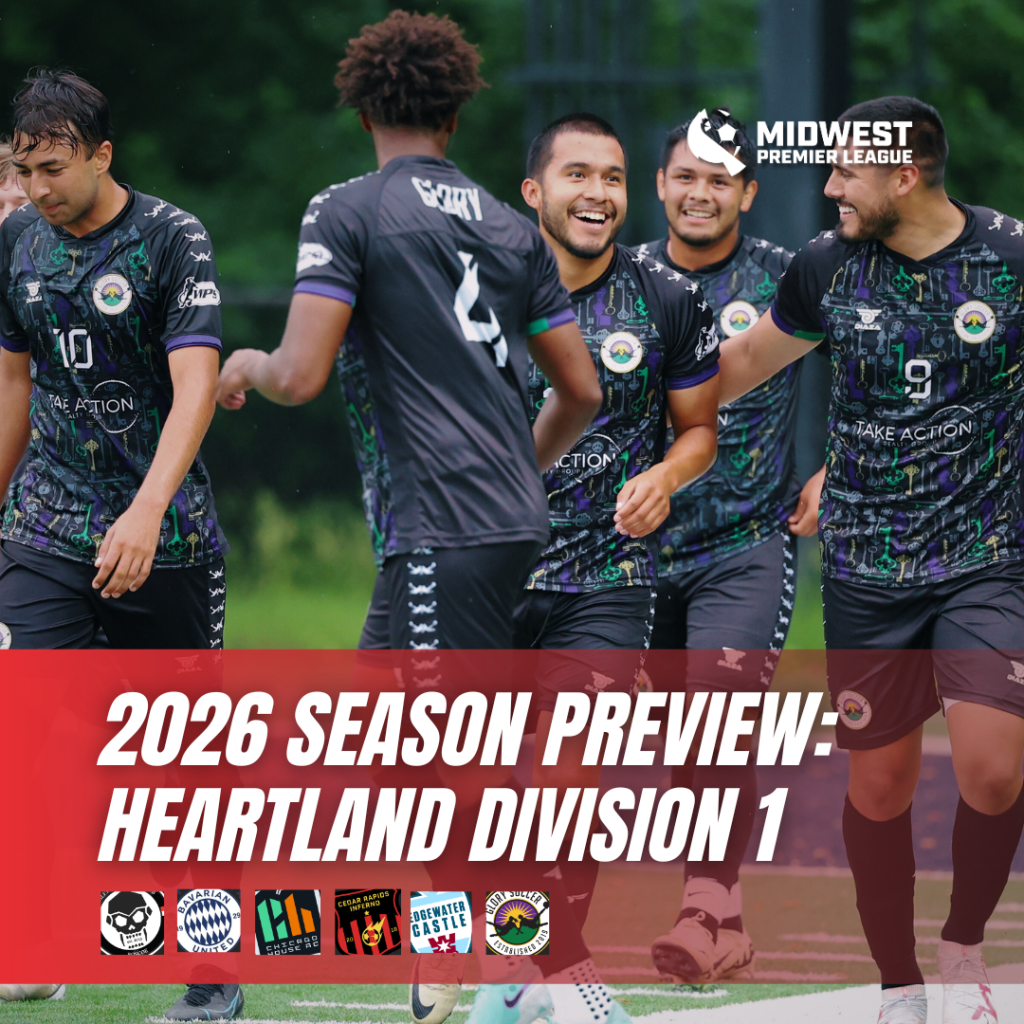
2026 Season Preview: Heartland Division 1

The 2026 Heartland Conference Division 1 season arrives with fresh intrigue. With RWB Adria Chicago’s departure leaving the door to the championship wide open, no club enters the season as a clear favorite. Two relegation spots remain in play, and with a division featuring seasoned contenders alongside hungry newcomers, every point will matter from the opening weekend.

Chicago House AC have been knocking on the door of a Heartland Conference title for several seasons now, and 2026 may finally be their year. After finishing behind Adria last season, level on points but denied the championship on tiebreakers, the frustration in the House camp will be difficult to overstate. Coach Shannon Seymour has built a consistent, well-organized side, and with Ricardo ‘Kikis’ Avalos claiming the conference’s top scorer award for a third straight season, the attacking firepower is undeniable. With the perennial champions now gone, House enter 2026 as the team to beat.

Bavarian United SC arrive as one of the division’s most decorated clubs, and with the top spot now genuinely up for grabs, the Milwaukee side will feel this is as good a chance as any to reclaim the summit. The six-time National Amateur Cup winners finished third last season with 20 points, and all of the club’s energy is channeled into the MWPL squad. That singular focus could make all the difference in a tight title race, especially with the return of Noah Kummrow, Antonio Pinto, and Ethan Walls.

AFC Roscoe enter their second Division 1 season with something to prove. The Chicago club, whose board members famously double as players, survived their debut campaign with 18 points. That’s enough to stay up, but not without some nervy moments near the bottom. A full season of experience at this level should count for something, and Roscoe’s culture of collective commitment has always been one of their defining strengths. Defenders Liam Myers, Kevin Farnia, and Ethan Peet are returning to form a brick wall around the net. Expecting more from year two feels entirely reasonable.

Green Bay Glory return for their second consecutive Division 1 campaign under co-founder and coach Kerry Geocaris, whose philosophy of attacking, identity-driven football has made the Wisconsin club one of the more watchable sides in the conference. With 17 points last season and key returnees like goalkeeper Haakon Utesch and high-motor forward Dennis Nyame expected back, Glory have a genuine foundation to build on. The goal will be to move clear of the relegation picture and establish themselves as a genuine mid-table presence.

Edgewater Castle FC return to Division 1 as the promoted side from Division 2, having claimed the title last season with a commanding +15 goal difference. The Chicago club knows this level, they played against these same clubs as recently as 2023. That familiarity could help them avoid the growing pains that often accompany promotion. Staying up comfortably would represent a successful season; pushing further up the table would announce a real return, especially now fielding a team in USL2.

Cedar Rapids Inferno are the division’s most intriguing newcomers, making the jump from the Gateway Conference where they won the title in 2024. The Iowa club brings a strong recent track record and the novelty of being the lone out-of-state side in an otherwise Chicago-and-Milwaukee-heavy division. Adapting to new opponents and a new conference dynamic will be the early test, but Cedar Rapids are not without the tools to make an impression.

With the season on the horizon, the 2026 Heartland Division 1 looks set to be the most competitive edition yet. The title race at the top, the fight for survival at the bottom, and the stories of clubs building something meaningful in between, this is a division worth watching from the very first game.

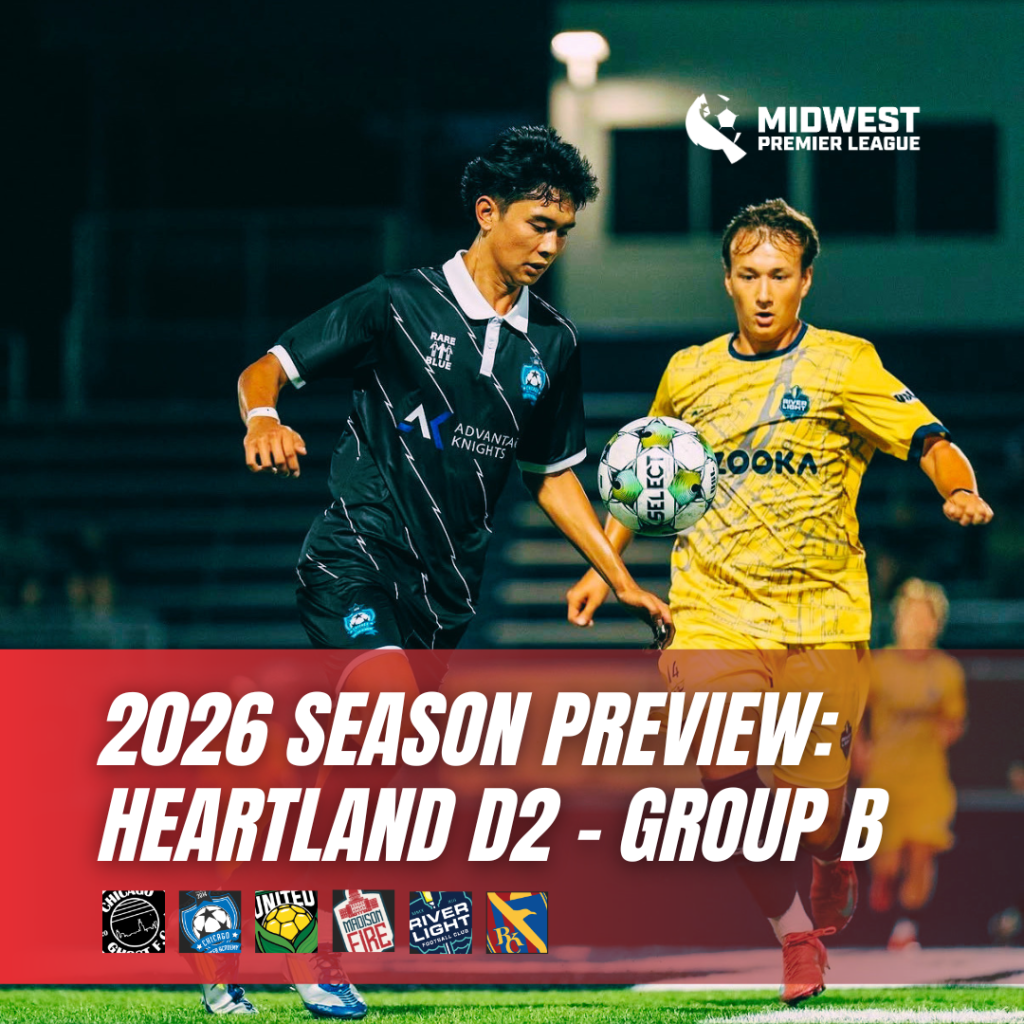
2026 Season Preview: Heartland Division 2 – Group B

The Heartland Conference’s promotion-and-relegation structure has sharpened competition at every level, and Division 2’s Group B in 2026 is set to be its fiercest test yet. With only a single promotion spot on offer, six clubs will spend the season fighting tooth and nail for one golden ticket to Division 1, and the margin between success and another year in the second flight could come down to a solitary point.

Last season, Edgewater Castle FC claimed that prize with 20 points from 10 games, ascending to the top flight on the strength of a dominant campaign. Their departure leaves a vacancy at the top of Group B, and no shortage of candidates to fill it. Chicago Ghost FC finished fifth in the 2025 standings, just four points off the pace, and return to Division 2 with a retooled squad and sharper focus. RKC Third Coast brings the organizational DNA of a program that produced professional signings in Kajus Kontautas and Blake Gillingham. DeKalb County United drop down from Division 1 after a difficult 2025 campaign, arriving with top-flight experience that could prove decisive. River Light FC, Madison Fire and Chicago Soccer Academy make their Group B entrances, the former two sporting second teams, expanding the geographic footprint of the division from the Wisconsin state line to the Fox River corridor.

Chicago Ghost FC are perhaps the most intriguing storyline in Group B. After finishing fifth in Division 2 last season, Las Rosas have spent the offseason addressing the gaps that cost them. The departure of captain and top scorer Ben Goldberg is a significant blow, but the club has moved quickly to offset the loss, retaining leaders like Mateo Ormaza and welcoming an influx of collegiate athletes. Critically, the arrival of new head coach Phillip Kroft signals a shift in culture: a more structured, tactically mature approach to a division where consistency wins promotions. Chicago Ghost have been here before, nearly cracking the top spot. In 2026, they arrive knowing exactly what it takes, and what it costs to fall short.

RKC Third Coast‘s entry into Group B is one of the most significant developments heading into the season. The Racine-based organization has built a reputation for identifying and developing talent, a model that produced professional signings last year. They bring that same infrastructure to the MWPL. With roots in USL2 competition and a track record of preparing players for higher levels, RKC will not need time to settle in. The question is whether their development-first philosophy translates into results quickly enough in a compressed, high-stakes ten-game season.

DeKalb County United‘s relegation from Division 1 after the 2025 season, finishing sixth with 15 points, tells only part of their story. The gap between Division 1’s top clubs and its bottom half is not trivial, but United’s season in the top flight will have sharpened them in ways that matter. They know how to compete at a higher tempo. They carry the motivation of a club that has tasted the top division and wants to return, especially with Aiden Sears returning, in addition to welcoming 6’4 keeper Beckham Denu and attacking threat Britton Sala. In a group without a clear front-runner, that experience could be the differentiator.

River Light FC arrive from Aurora as one of three clubs new to the group, bringing with them the energy and hunger that characterizes first-season MWPL sides. Located in the Fox River Valley, River Light represent an exciting development for the league’s geographic growth. New clubs often take time to find their footing, but these guys have experience in USL2, and they’ll catch opponents who underestimate them. Their ceiling in 2026 is genuinely unknown, which makes them one of the division’s most compelling wildcards.

Madison Fire brings another new voice to Group B, crossing the state line from Wisconsin’s capital city. Madison has long been a strong collegiate soccer market, and the Fire will no doubt look to tap that pipeline as they establish themselves in MWPL competition. Like River Light, they are unproven at this level, yet experienced in USL2, so that also means they arrive without the weight of expectation. If they can organize quickly and lean on the passion of their fan base, the Fire could ignite more than a few surprises over the course of the season.

Chicago Soccer Academy rounds out the six-club group, bringing a youth development mission to the senior competition stage. Clubs rooted in academy structures can take time to build winning cultures at the adult level, but their access to a deep pipeline of home-grown talent is an asset that compounds over time. That time should be shortened with stars like George Maridis and others joining soon before the season begins. In a short season, the question for CSA will be whether their development philosophy can translate quickly into the grind of competitive match play.

Group B in 2026 does not have an obvious favorite, and that is precisely what makes it so compelling. Chicago Ghost FC arrive as the group’s most battle-tested side with the clearest promotion mandate and a new coaching voice to sharpen their edge. DeKalb County United carry top-flight experience that could make them immediately dangerous in a lower-tempo environment. RKC Third Coast bring organizational depth that expansion teams rarely possess. And River Light FC, Madison Fire, and Chicago Soccer Academy each carry the dangerous unpredictability of clubs with nothing to lose and everything to gain.

The Midwest Premier League’s broader 2030 Plan, built around sustainable club development and deeper community roots, is visible in every team that takes the pitch this season. The competition structure is working. The stakes are real. And with only one club earning the right to call themselves Division 1 when the final whistle blows, every match in Group B will carry the full weight of what this league has become.

Feature Interview: Matthew A. Alcala (Chicago Ghost FC)

As part of this season preview, we spoke with Chicago Ghost FC CEO Matthew A. Alcala about last season’s near-miss, the club’s approach to building a promotion-worthy squad, and what the 2026 campaign means for Las Rosas.

Fourth place was never the target, and fifth stung even more. But Alcala is clear-eyed about what it revealed. “Every point counts,” he said. “While our 2025 campaign was strong, we ultimately finished fifth, just four points shy of the top spot.” In a ten-game season, four points is the difference between a promotion parade and another year in Division 2. That lesson has shaped everything about how Chicago Ghost has approached 2026.

Chicago Ghost haven’t flinched at the arrival of new clubs or the structural changes to Group B. “We embrace adversity,” Alcala said, “and regardless of change, we will compete against all competition.” It’s the kind of quiet confidence that tends to come from a club that has already proven it belongs.

For Alcala, the balance of promotion and building foundation lies in the type of players Chicago Ghost recruit. “We prioritize recruiting collegiate athletes, as they understand the significance of every match and the preparation required to win key games.” Those players arrive already conditioned to high-stakes competition, weekly preparation routines, and the mental demands of a short season. The addition of new head coach Phillip Kroft is central to that approach. Alcala expects Kroft to “bring maturity and a winning mentality to both training sessions and matches, helping our players stay focused on each contest as it comes.“

The loss of Ben Goldberg, 2025 captain and the club’s leading scorer and assister, is real. Alcala doesn’t minimize it. But he’s equally energized by what’s coming. “We are excited to return a wealth of leadership from Mateo Ormaza,” he said, “and welcome an influx of talented collegiate players.” Ormaza steps into a larger leadership role at a moment when the club needs experienced voices to carry the standard that Goldberg set.

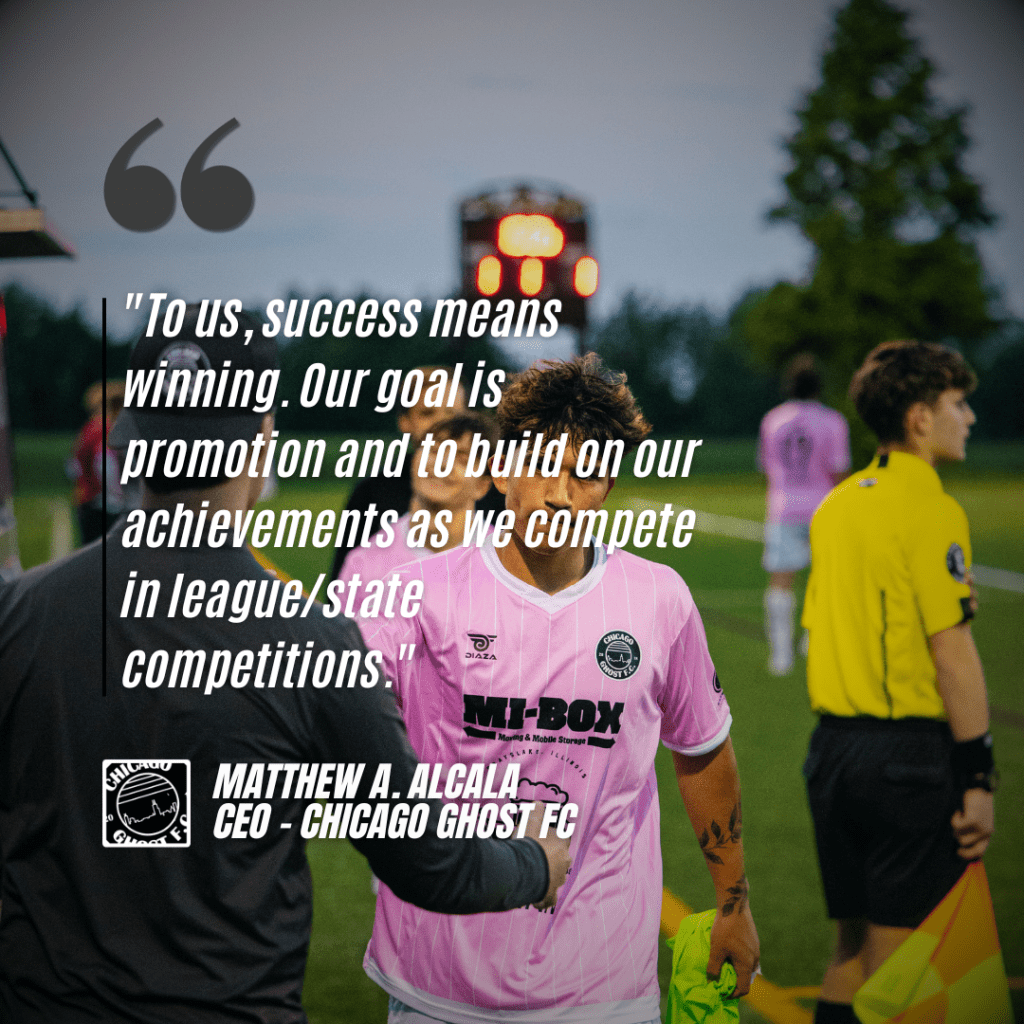
The answer to success is unambiguous. “To us, success means winning. Our goal is promotion and to build on our achievements as we compete in league and state competitions.” There is no hedging, no secondary objective. Chicago Ghost have tasted the near-miss. They know where the line is. In 2026, they intend to cross it.

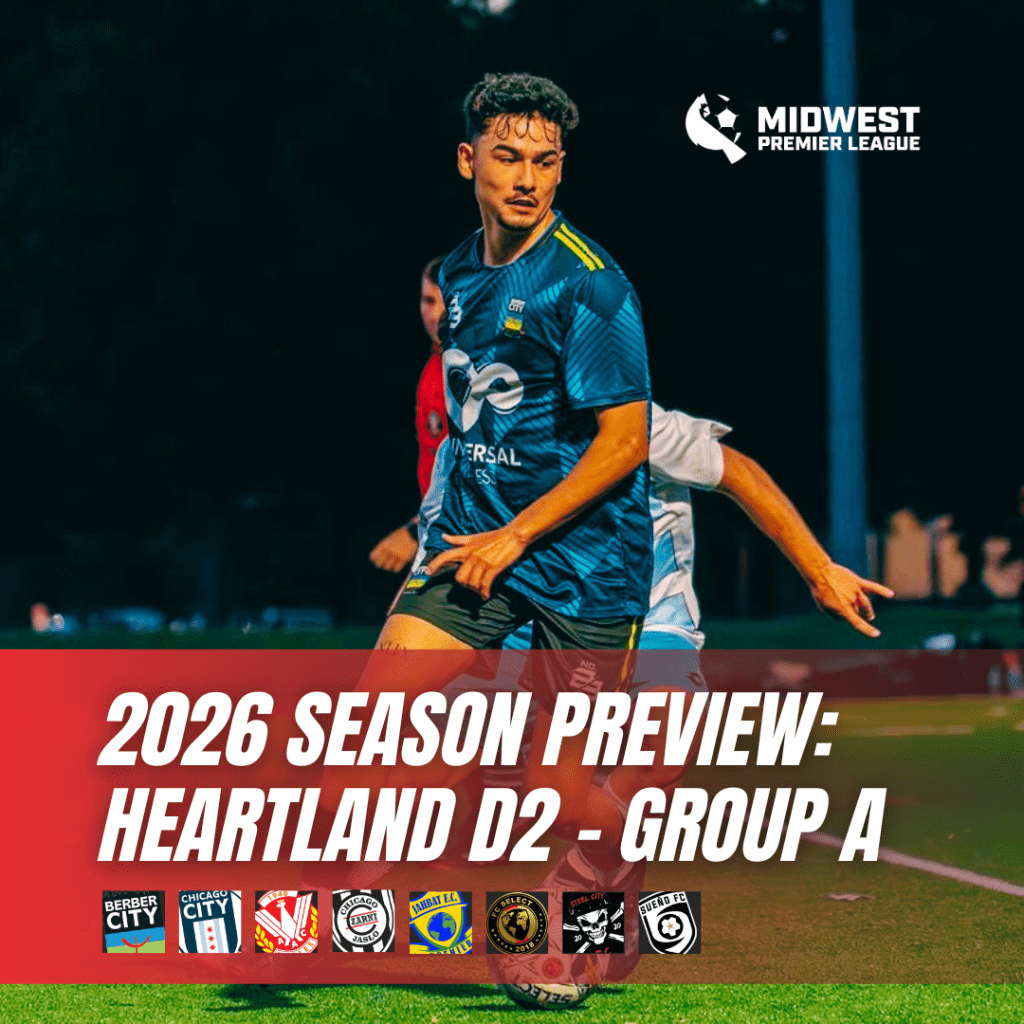
2026 Season Preview: Heartland Division 2 – Group A

The 2026 Heartland Division 2 season arrives with plenty to prove. Eight clubs spread across Chicago and its suburbs will compete in Group A, each with their own ambitions, identities, and reasons to believe this could be their year. The Midwest Premier League’s promotion and relegation structure continues to sharpen the stakes, and with only one automatic promotion spot available, the margin for error is as thin as ever.

Last season told a story of emerging order at the top. Edgewater Castle FC claimed the Division 2 crown, while RKC Third Coast II and Steel City FC rounded out the top three. But rosters evolve, confidence shifts, and new clubs enter the picture. The 2026 Group A table will be written from scratch, and every match will count.

Steel City FC returns to Division 2 with familiar resolve. The Joliet-based club finished third in last season’s standings and will be looking to convert that experience into a promotion push. Their presence in the division is a known quantity, especially with all-time leading scorer Jake Lysik, Justin Darlage, and Head Coach Nigel Dillard leading the charge. This is a club that competes hard and understands what it takes to grind through a ten-game season.

Berber City FC, based in Chicago, returns for another campaign after finishing fourth in 2025. The club has been steadily building since their MWPL debut in 2021, and each season adds another layer of experience to their roster and organization. A promotion push has been within reach, the question is whether this is the year they finally break through.

Chicago City SC also returns to the fold, bringing continuity to a division that has seen significant turnover. Their experience in the league, in addition to their large academy roster, gives them a foundation to build from as they look to push up the table in 2026.

AAC Eagles, Czarni Jaslo, FC Select, and JaHbat FC round out the eight-club group, bringing a mix of Chicago-area football culture to the competition. Czarni Jaslo is no stranger to the upper levels of this league, having competed in Division 1 in 2025 before being relegated. That experience of playing at the top flight, however difficult the campaign, brings a certain credibility and hunger to their return. JaHbat FC has already welcomed in a mix of high school and college stars, such as Joseph Munyaneza, Jonny Harwood, and Benjie Koziura, further amplifying the vast amount of talent in Chicagoland. For the others, the division presents an opportunity to establish themselves, build an identity, and begin the climb.

Perhaps the most intriguing storyline heading into 2026 is the arrival of Sueno FC from Bolingbrook, IL. The club enters MWPL competition with a dual structure from the start, fielding both a squad in Division 2 and a first team in USL2, a decision that signals long-term ambition rather than a simple one-season experiment. Sueno FC already carries notable pedigree. In last season’s USL2 competition, the club produced players who went on to the MLS SuperDraft, MLS Next Pro, Liga MX, and clubs in the Czech Republic, a remarkable output for any developmental program, let alone one making its MWPL debut.

Group A in 2026 has the makings of a genuinely competitive division. Steel City FC and Berber City FC bring experience and unfinished business. Czarni Jaslo arrive with the chip of relegation on their shoulder. And Sueno FC enter with ambition, infrastructure, and a player development record that commands respect from day one.

With only one promotion spot available and ten matches to settle the matter, there is no room for slow starts or dropped points. The Heartland Division 2 — Group A campaign begins now. Every match matters.

Feature Interview: Josh Guerra (Sueno FC)

As part of this season preview, we spoke with Sueno FC owner Josh Guerra about the club’s transition into MWPL play, the challenges of competing on multiple fronts, and what success looks like in their debut Division 2 campaign.

Sueno FC enters Division 2 not just as a new club, but as one already operating at scale, with a second squad added alongside their first appearance in the MWPL. For Guerra, that structure is central to everything Sueno is trying to build.

“Adding a second team to the club is a very exciting step. It changes things a bit, of course, but in a positive way. Having a second squad allows us to expand our footprint in the market, reach more players, and give meaningful minutes to younger players who are coming through the system. It’s about creating a proper pathway within the club, giving these lads the chance to develop in real competitive football rather than just waiting for opportunities.“

That pathway is already bearing fruit. Last season, three players from Sueno’s squad were selected in the MLS SuperDraft, one signed in MLS Next Pro, one in Liga MX, and two found clubs in the Czech Republic. It’s the kind of player development record that announces a club’s intentions clearly, and sets expectations high.

The transition from USL2 to MWPL will ask different questions of the squad, and Guerra is thoughtful about what those differences look like. “In USL2 you often see squads full of very athletic young players, many of them coming straight out of the college system. The matches can be very quick, very transitional. With the MWPL, I expect something a little different in character. You’ll likely face teams that are slightly more settled, perhaps a few experienced players mixed in with younger lads. The game might ask different questions of you – organization, patience with the ball, and managing moments across the ninety minutes.“

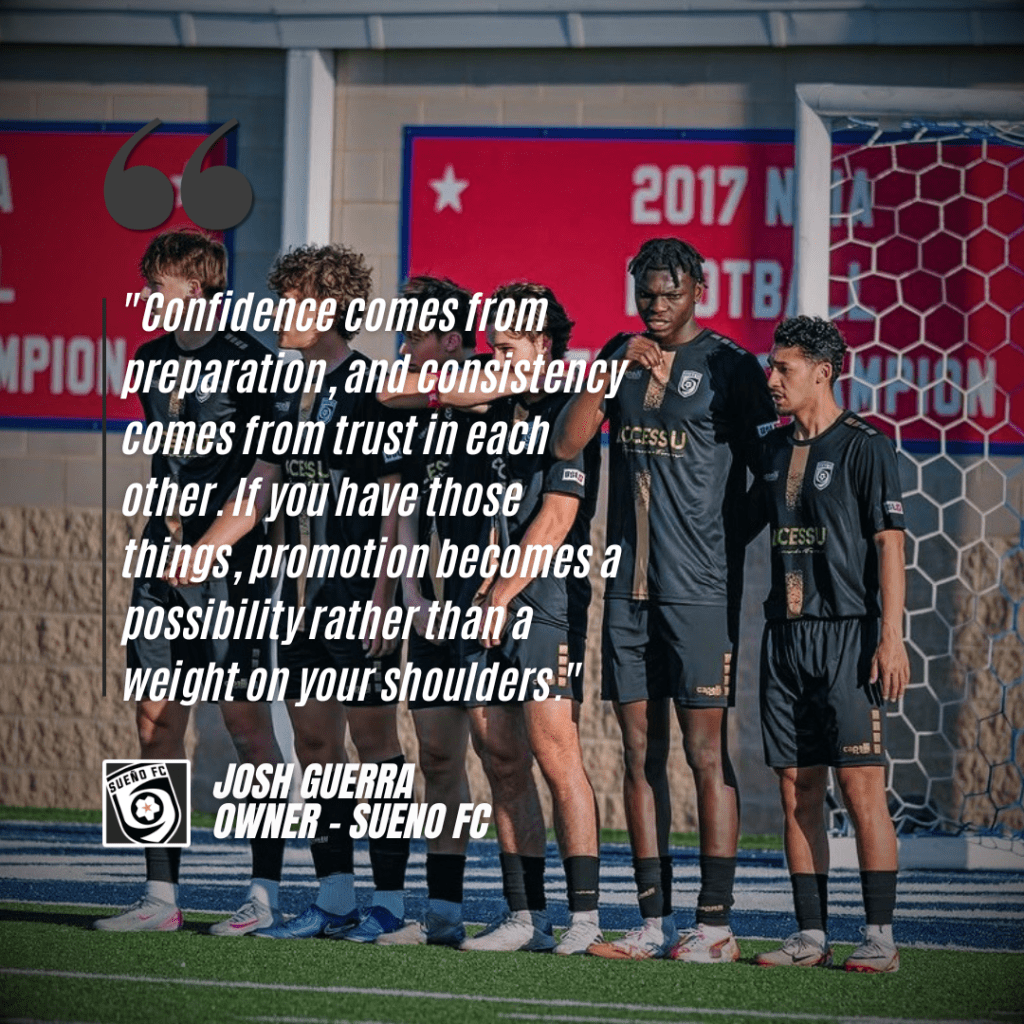
Competing across two competitions while integrating a second squad creates its own set of pressures. But Guerra is clear about how he wants his staff to approach it: by keeping the focus close. “Promotion is a wonderful objective to have, but you must be careful not to let it become a burden on the players. Our goal as a staff is to keep their focus on the work: the training session today, the match this weekend, doing the simple things well. Let’s win the next tackle, the next pass, the next training session.“

It’s a philosophy grounded in process over outcome, and one that reflects a club thinking beyond a single season. When asked to define success for Sueno’s debut campaign in Division 2, Guerra’s answer is telling: “For Sueno FC, success this season is about establishing ourselves properly in Division 2. We want to be competitive every week, difficult to play against, and consistent in our performances. Are the players improving? Are the young players gaining experience? Are we building a squad that believes in itself? If we finish the season knowing we’ve created a stronger football club – one that can challenge at the top – then I would consider that a very good season indeed. If promotion comes along with that, well, that would be a wonderful bonus.“

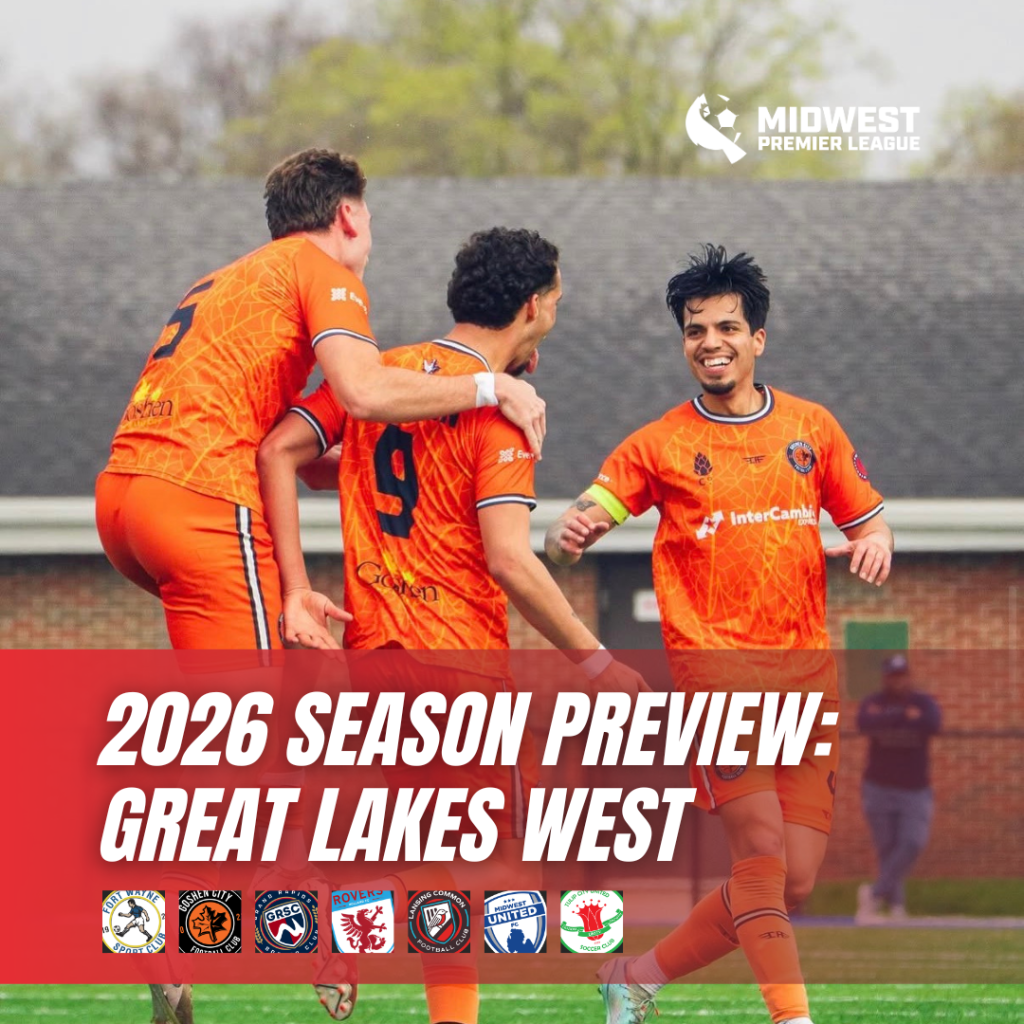
2026 Season Preview: Great Lakes West

With Goshen City FC’s remarkable debut campaign now etched into the record books, the Great Lakes Conference West Division enters 2026 with a new benchmark, and a new target on the Goshen badge. In just their first MWPL season, the Indiana side ran away with the division title, finishing with 23 points and a stunning +17 goal differential. Now, six rivals are sharpening their knives ahead of a campaign that promises to be the most competitive the West Division has seen yet.

Whether it is a title defense, a redemption arc, or an overdue breakthrough, every club in the West enters 2026 with something to prove.

The story of the 2025 season was impossible to ignore: Goshen City FC, in their maiden MWPL campaign, didn’t just survive, they thrived. A +17 goal differential and a dominant 23-point tally made clear that this was no fluke. Founded in 2023, the Indiana club has quickly built an identity rooted in community, energy, and an eye for talent. The challenge of 2026 is an entirely different one: defending. With the division now fully aware of what Goshen brings, Head Coach Tyler Born and club founder Henrique Eichenberger will need to evolve their approach. Returning talent like Richy Garcia and Flavio Cruz provide a solid foundation, while players like Stephen Bandi and Ariel Matute will be expected to build on their debut campaigns. Goshen enter as favorites, but the target on their back has never been larger.

Lansing Common FC arrived in 2025 as many people’s pick to fill the vacuum at the top. To their credit, they were not far off, finishing runners-up with 19 points. The Robins are perennial contenders, but the crown has remained elusive. Head Coach Brent Sorg returns for another campaign, leaning on the same blend of local identity and tactical structure that has made Lansing one of the division’s most respected setups. Spencer Powe, the Captain and 517 award winner, remains central to their ambitions, while the continued development of younger players around him could be the key that finally unlocks the title. The supporters will be expectant. Sorg and his side will need to deliver.

Holland Struikrovers may have the most intriguing trajectory of any returning side. After consecutive seasons of gradual improvement, the Struikrovers finished third in 2025 with 17 points, proof that they are no longer just making up the numbers. Under their new coaching setup led by Cole Pauly, Holland will need to build a side that is difficult to ignore. Consistency has been their calling card in the past, and if they can maintain the defensive solidity that has underpinned their rise, another top-three finish is well within reach. The question is no longer whether Holland belong, but whether they’re ready to take the next step.

Midwest United FC U23 were perhaps the most pleasant surprise of the 2025 campaign. Competing as the youngest squad in the division, with more than 60% of their roster drawn from their own academy, they finished fourth with 16 points, an impressive haul for a developmental side in its debut season. Head Coach Hector Fernandez has built a culture of intensity and ambition around his young group, and returning players Nolan Mick and Chase Gries will provide valuable experience heading into 2026. New signing Brian Mosqueda is expected to make an immediate impact. Their mission is clear: to bridge the gap between elite youth development and senior competition, and they are doing exactly that.

1927 SC know all too well the feeling of falling just short. After a near-miss in 2024 and a disappointing fifth-place finish in 2025, the Fort Wayne outfit face a pivotal moment. The club has always prided itself on continuity and character. Questions linger over whether the squad has the firepower to mount a genuine title challenge, but a full preseason, a settled coaching setup, and the hunger that comes from finishing in mid-table should not be underestimated. If they can rediscover the form that once made them division contenders, 1927 SC are a dangerous proposition.

Grand Rapids SC endured a difficult debut in 2025, finishing sixth with a -6 goal differential. But a tough first season should not be mistaken for a ceiling. New coach and former World Cup defender Manuel Vidrio have been building deliberately, and the squad has the raw material to be competitive. Integration takes time, especially in a physically demanding division. Year two should tell a far clearer story about where Grand Rapids are truly headed.

Tulip City United endured a difficult 2025 campaign, finishing last in the division with just 6 points and a -10 goal differential. A significant rebuild is underway under a new coaching staff led by Zach Riordan, with Greg Ciethaml and goalkeeper coach Aaron Menyes alongside him. Tulip City have historically been a hard-nosed outfit, and the new regime will be determined to prove 2025 was an anomaly, not a trend.

With Goshen City FC wearing the crown and six clubs looking to take it from them, the Great Lakes West Division enters 2026 as unpredictable as ever. Lansing Common FC will push hard for the title that keeps eluding them. Holland Struikrovers will look to take the next step. Midwest United U23 will continue to confound expectations. And 1927 SC, Tulip City United SC, and Grand Rapids SC each have their own scores to settle.

By the time July draws to a close, one club will earn the right to represent the West in the Great Lakes Conference Final. Until then, the division is anyone’s to claim.

Feature Interview: Hector Fernandez (Midwest United FC U23)

For a club built on youth and development, finishing fourth in their MWPL debut was more than a result, it was a statement. Midwest United FC U23 arrived in 2025 with an identity rooted in their academy, and left the season having proven their model works.

Head Coach Hector Fernandez was measured, but honest, when reflecting on where his side stands.

“I think that for our first season, our placing was fine. We are the youngest team in the league and play a lot of our academy U16–U19 players.”

That developmental mission is central to everything at Midwest United. More than half of the squad comes directly through the club’s own academy pipeline, a figure Fernandez is proud of.

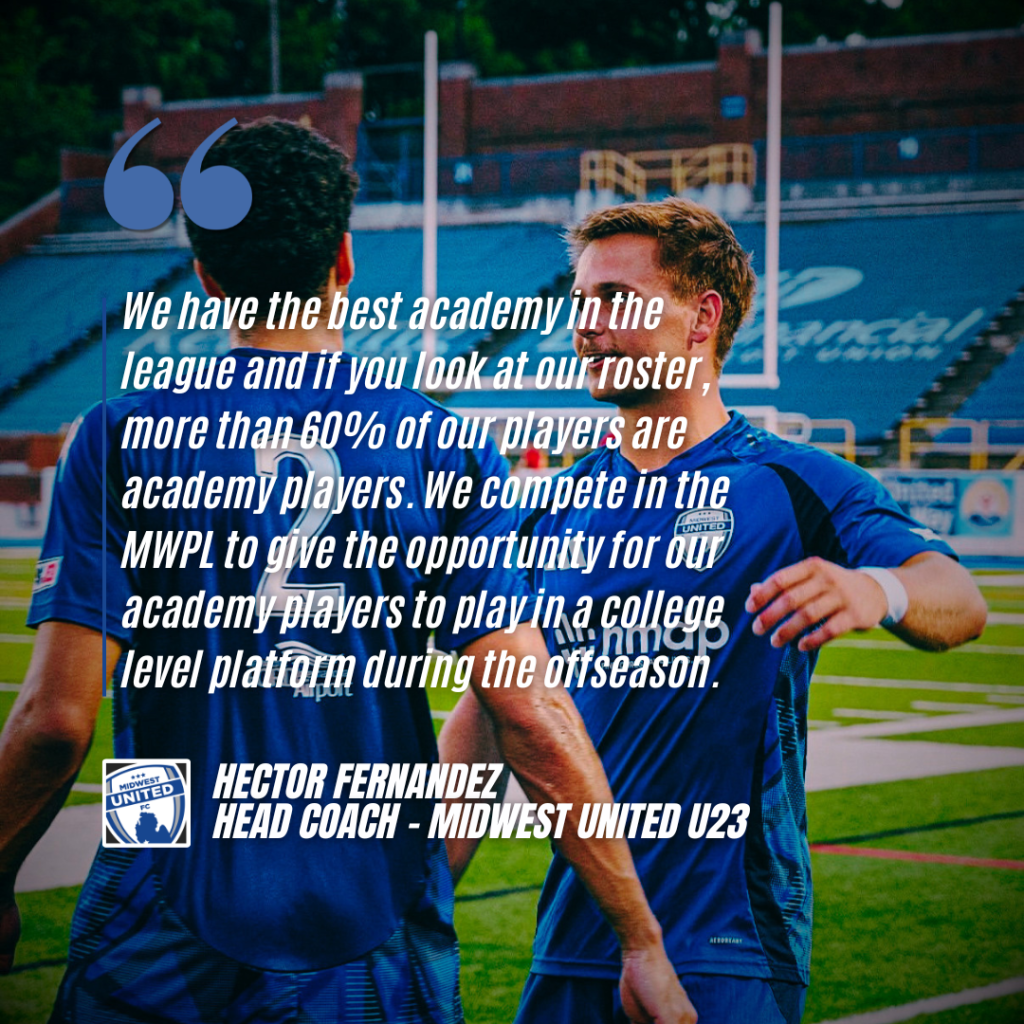
“We have the best academy in the league, and if you look at our roster, more than 60% of our players are academy players. We compete in the MWPL to give the opportunity for our academy players to play in a college-level platform during the offseason.”

But don’t mistake development for a lack of ambition. Fernandez is clear about where his side is aiming in 2026.

“Our mindset is to compete in the MWPL with our group. We are aiming to be in contention for the division.”

That contention was built on some fiercely contested matchups last season. Fernandez singled out two opponents when reflecting on the intensity of the 2025 campaign.

“We had great games against all of the teams. Rovers and 1927 were always intense games, both ways.”

Those rivalries, still young, are already showing the hallmarks of something lasting. And Fernandez believes the division as a whole will remain difficult to predict.

“I don’t think a lot will change. I believe the top four or five clubs will be top four or five again, just in a different order.”

If Midwest United FC U23 have their way, that order will have their name a little higher up the table. With Nolan Mick and Chase Gries returning as experienced heads and new signing Brian Mosqueda providing fresh energy, the pieces are in place for another strong campaign. The academy model is working. Now it’s time to see how high it can take them.

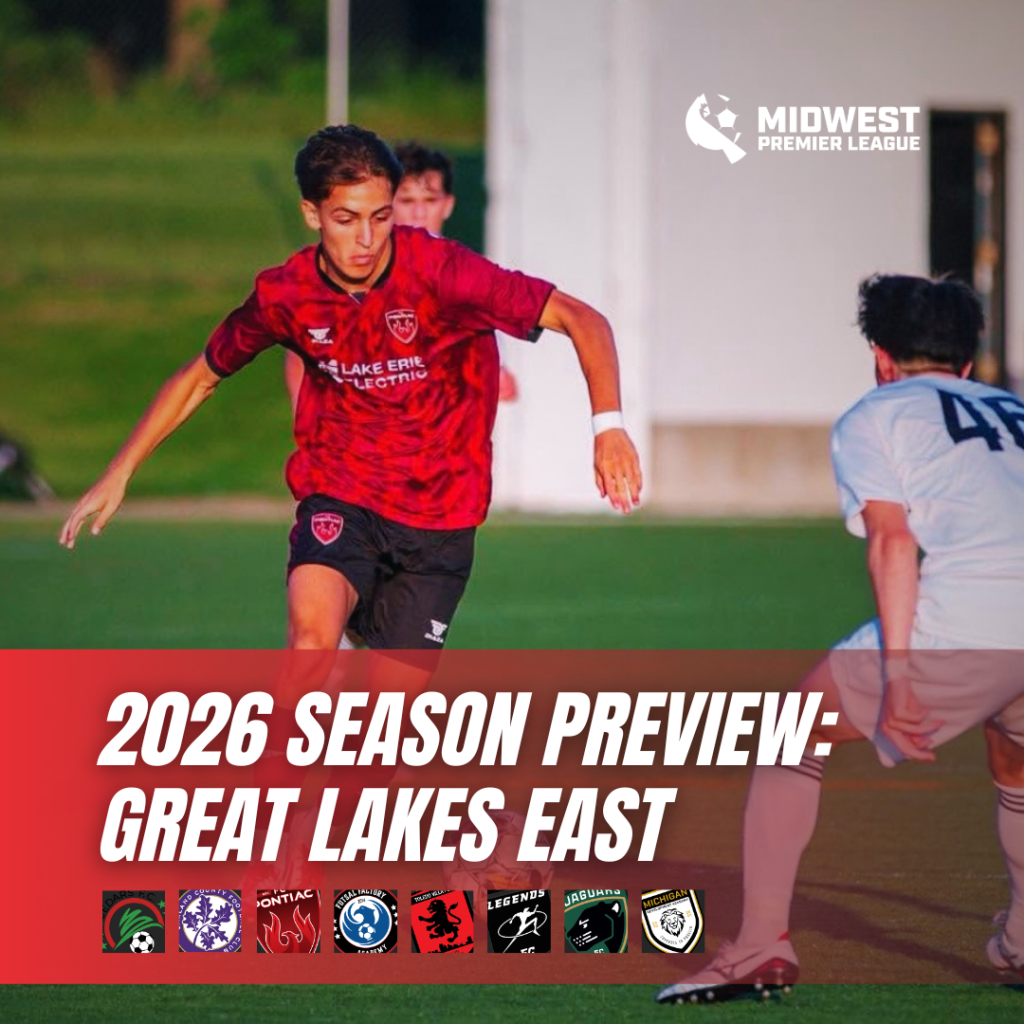
2026 Season Preview: Great Lakes East

As the Midwest Premier League prepares for another highly anticipated summer, the Great Lakes East Division once again emerges as one of the most competitive landscapes in regional soccer. With a slightly reshaped lineup and a blend of continuity, rebranding, and fresh ambition, the 2026 campaign promises a tightly contested race where margins will be razor-thin and every point will carry weight.

At the summit stands Cedars FC, the reigning division champions after finishing atop the table with 23 points and a +19 goal difference. Their rise has not been accidental, it has been built on consistency, identity, and evolution. Despite the new leadership of head coach Hesham Alyafai, Cedars have cultivated a culture rooted in discipline and accountability, while continuing to adapt to the league’s rising standard. With a strong returning core and key additions expected to contribute immediately, the expectation internally is clear: contend for another title and push for conference glory once again. But as history shows, defending the crown in this division is often more difficult than winning it.

Just behind them last season, Michigan Jaguars quietly put together one of the most complete campaigns in the division, finishing third with 19 points and a +11 goal difference. Built on a balanced model that blends academy talent with experienced collegiate players, the Jaguars have established themselves as one of the most stable sides in the East. The next step for new head coach Alex Isaevski, is turning that consistency into a legitimate title push. If they can find another gear in decisive moments, they have all the tools to challenge at the very top.

One of the most intriguing storylines entering 2026 is the transformation of Michigan Development Academy, formerly known as Troy United FC. After finishing fourth last season with 18 points, the club now enters a new era under a new identity. While the name has changed, much of the foundation remains intact with Fran Alvarez, Drew Swancutt and Clay Lafayette among others returning, offering continuity that could prove invaluable early in the campaign. If they can build on last year’s upward trajectory while embracing their new structure, Michigan Development Academy could once again be a factor near the top of the table.

Further down the standings, Futsal Factory Academy continues to represent one of the most unique profiles in the league. Their sixth-place finish (15 points, +5 GD) highlighted both their potential and inconsistency. Rooted in futsal, their technical ability and quick-tempo style can disrupt even the most organized teams. Now following a top-seeded finish in the National Futsal Premier League, and entering another season with valuable MWPL experience, the question is whether they can translate flashes of brilliance into sustained results across the full campaign.

For FC Pontiac, last season provided a learning curve in their first taste of MWPL competition. Finishing eighth with nine points, the club showed glimpses of promise while adjusting to the physical and tactical demands of the league. With a year of experience now under their belt, expectations will shift toward progression. If their young core continues to develop and adapt, FC Pontiac could take a meaningful step forward in 2026.

A similar narrative surrounds Legends FC, who endured a difficult debut season, finishing near the bottom of the table. Known for their strong youth development system, the challenge now lies in translating that pedigree into results at the senior level. Growth, rather than immediate contention, may define their season, but with their infrastructure and talent pipeline, they remain a long-term project with significant upside.

New to this year’s divisional landscape are USL2 clubs fielding a second team, Oakland County FC and Toledo Villa FC, who add further depth and geographic diversity to the competition. Their inclusion reinforces the division’s identity as a proving ground not just for Detroit-area talent, but for the broader Great Lakes region.

Each brings its own narrative, whether it’s establishing a foothold, building a culture, or chasing a breakthrough season. And in a division where the gap between top and bottom can close quickly, no matchup can be taken lightly.

What defines the Great Lakes East Division isn’t just the presence of a defending champion, it’s the collective ambition across every club. From established contenders to evolving projects, every team enters the season with something to prove. The result is a league table that rarely settles early and a title race that often stretches to the final matchday.

With identities firmly established and new chapters beginning, the 2026 season shapes up to be another relentless campaign. And if recent years are any indication, the path to the top will demand not just quality, but resilience, adaptability, and consistency when it matters most.

Feature Interview: Mohamed Salman (Cedars FC)

As Cedars FC prepares to defend its Great Lakes East Division title, Club Director Mohamed Salman reflected on the club’s evolution, identity, and expectations heading into the 2026 season.

Over the past four years, Cedars FC has established itself as one of the most consistent and competitive teams in the league, an achievement Salman attributes to a careful balance between stability and growth.

“We’ve made a conscious effort each year to raise our standards,” he explained. “Whether that’s through player development, tactical adjustments, or strengthening our culture, the balance comes from staying true to our identity—hard-working, disciplined, and team-first—while continuing to adapt to the increasing level of competition.”

A key leader looking to keep that stability is head coach Hesham Alyafai, entering his first season with the club. His leadership, Salman noted, will be instrumental in shaping the environment and expectations within the squad.

“I am excited to join Cedars FC, a club with a strong reputation and a proven track record of success in the Midwest Premier League,” Alyafai said. “I look forward to building a competitive, disciplined environment and helping our players reach their full potential, both individually and as a team.”

With a strong core returning and new additions expected to contribute, Cedars enters the season with both continuity and renewed energy. But after back-to-back division titles and a conference championship in recent years, the internal bar has been set high.

“One of our biggest takeaways from last season was the importance of maintaining consistency in key moments, especially late in the year,” Salman said. “Our goal is not just to replicate past success, but to build on it.”

That ambition is clear: another division title and a push for the conference crown.

Salman also acknowledged the growing competitiveness of the Great Lakes East Division, emphasizing that no match can be overlooked.

“Every game requires full focus,” he said. “There are always a few matchups that stand out due to familiarity and competitive history—those are games our players and staff look forward to.”

Looking beyond the division, Cedars is also mindful of the broader conference landscape, particularly the strength of the West Division. Still, the club’s approach remains grounded.

“We focus on our performances week by week,” Salman said. “If we take care of our side, we’ll be ready for whoever comes out of the West.”

With a clear identity, strong leadership, and championship expectations, Cedars FC enters 2026 not just as the team to beat, but as a club determined to keep evolving at the top.

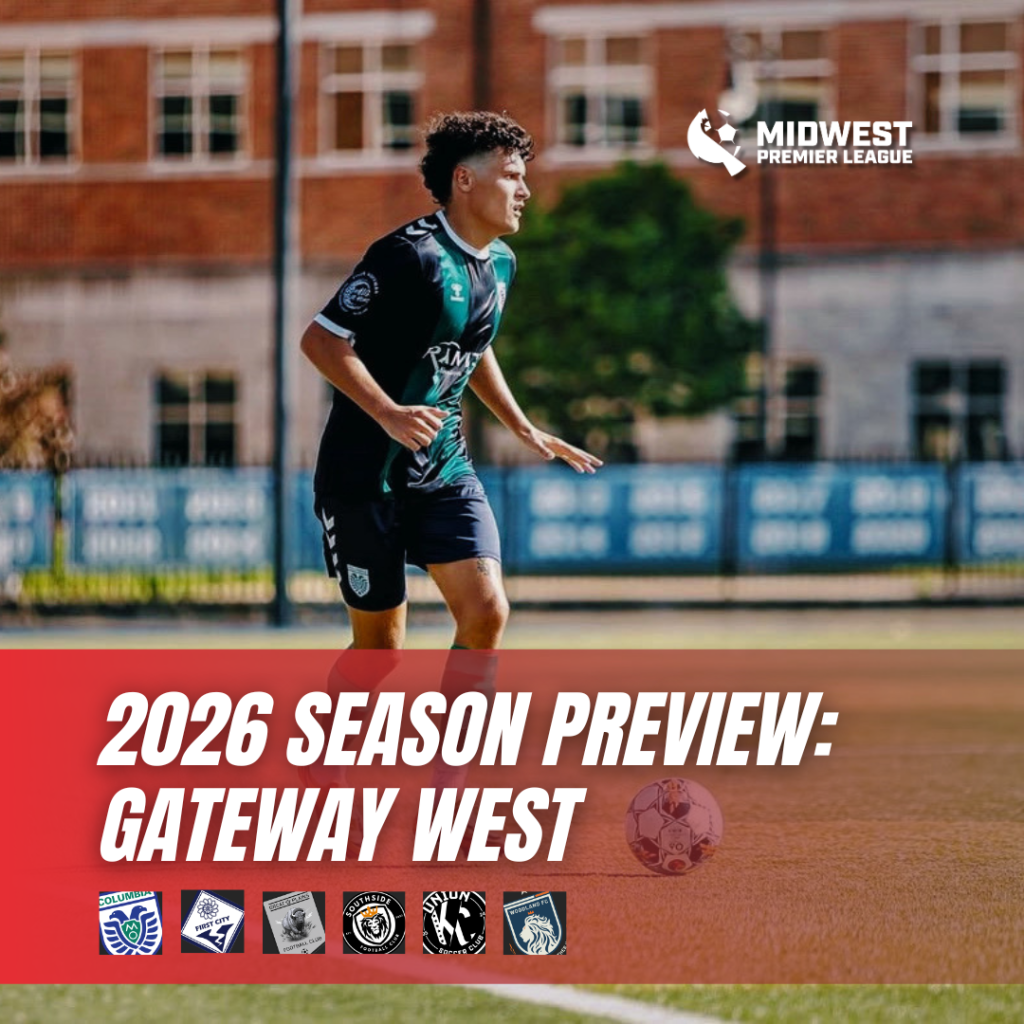
2026 Season Preview: Gateway West

A new frontier emerges in the Gateway Conference this season as the Midwest Premier League expands westward, introducing the Gateway West Division for the first time. Unlike its eastern counterpart, this division is built almost entirely from fresh identities and regional ambition: five Kansas City-area clubs joined by a familiar name from Columbia, Missouri. With no established hierarchy and no history to lean on, the Gateway West is as unpredictable as it is intriguing.

Geographically tight and culturally connected, this division has the feel of a local proving ground. From the suburbs of Shawnee, Kansas to the heart of Kansas City, Missouri, and westward to Leavenworth, every match carries added intensity. Travel is minimal, but stakes are high. With most clubs either brand new or entering a new competitive level, the Gateway West may quickly become one of the most volatile divisions in the league.

And at the center of it all stands a club with something to prove.

AFC Columbia enters 2026 as the only returning MWPL side in the Gateway West, but not from a position of strength. After finishing last in the Gateway South a season ago with just three points and a -13 goal differential, Columbia finds itself in a rare position: experienced, but searching for answers.

Under President Chris Miller, the foundation of the club’s identity remains rooted in technical play and structured attacking football. The question now is not whether AFC Columbia has experience in the league, but whether it can translate that experience into results. In a division full of unknowns, that experience still matters. But it no longer guarantees anything. Columbia enters not as a favorite, but as a benchmark for what happens when potential goes unfulfilled, and what it takes to respond.

Southside FC arrives from Grandview, Missouri with the kind of local pride and edge that defines lower league soccer. Representing a tight-knit community just outside Kansas City, Southside embodies the grassroots spirit of the game. While roster details remain limited, clubs like Southside often thrive on chemistry, familiarity, and hunger, traits that can disrupt more structured opponents. Their challenge will be translating that identity into consistent results across a demanding summer schedule. If they can turn home matches into fortress-like environments, Southside could quickly become one of the toughest outs in the division.

First City FC brings a different kind of identity to the Gateway West, rooted in history, community, and philosophy. Based in Leavenworth, Kansas, one of the oldest cities in the state, the club carries a sense of heritage into its MWPL debut. Led by Chairman Brad Alexander, that identity could translate into a disciplined, hard-nosed style of play, particularly against more free-flowing Kansas City sides. Expansion teams often face a steep learning curve, but First City’s success will likely hinge on organization and defensive solidity early in the season. If they can stay compact and steal points, especially on the road, they could quietly build momentum.

Union KC enters the league representing the heart of Kansas City, Missouri, and with that comes both opportunity and expectation. In a soccer-rich metro area, Union KC has access to a deep and diverse player pool, ranging from collegiate standouts to experienced amateur players. The name itself suggests cohesion and identity, two things that will be critical in a division filled with unfamiliar opponents. If Union can quickly establish a playing style and locker room culture, they could emerge as one of the more balanced sides in the division. Their ceiling may ultimately depend on how quickly they can turn potential into production.

Great Plains FC, based in Lenexa, Kansas, enters the MWPL with a name that evokes both regional pride and expansive ambition. As one of two Overland Park-based clubs in the division, Great Plains will immediately be part of a local rivalry that could define the season. These kinds of matchups often carry extra intensity, and often unpredictable results. It also doesn’t hurt to know they won their league competition last season, in addition to the Kansas State Cup. With new signings announced daily, and winning the Championship in the Preseason Diaza Soccer Tournament, this strong organization can surprise quickly. If Great Plains can establish consistency early, particularly in those high-stakes local clashes, they could position themselves as a legitimate contender.

Just across town, Woodland FC completes the Overland Park pairing and adds another layer of intrigue to the Gateway West. Sharing a territory with Great Plains sets the stage for one of the division’s most compelling storylines: a battle for local supremacy that could have broader implications in the standings. Woodland FC enters with a clean slate and an opportunity to define its identity in the MWPL after impressive runs in the U.S. Open Cup. Their success will likely depend on how quickly they can gel as a unit, which may not take long considering the impressive amount of preseason fixtures they’ve played. If they find rhythm early, they could become one of the division’s surprise packages.

In a division without history, every match becomes a chance to write it. There are no past champions here, no established hierarchies—only six clubs, each chasing the same milestone: to become the first Gateway West Division winner.


Feature Interview: First City FC

First City FC enters the Midwest Premier League as one of the most unique new voices in the Kansas City soccer landscape, representing Leavenworth, Kansas with a clear emphasis on identity, access, and long-term community building.

Chairman Brad Alexander describes the club’s foundation as rooted in both geography and philosophy. “First City FC has the benefit of separation from ‘the City’,” he said. “The Leavenworth community is just far enough away from everything that we are able to create our own little soccer microcosm.”

That identity is deeply connected to the local soccer ecosystem, which has existed for decades. The Leavenworth Soccer Association and surrounding recreational programs have helped establish a pipeline of players and participation that the club now hopes to elevate.

“Our community is excited for an opportunity to showcase the pride and work ethic of the First City of Kansas,” Alexander added.

Beyond the senior team, First City’s structure is intentionally built around accessibility. The club has implemented a youth continuation pathway beginning at age 15, designed to keep local players engaged after aging out of traditional recreational soccer. At the same time, the organization is launching an adult recreational program, reinforcing its “soccer for all” philosophy.

“We don’t want to compete with youth programs,” Alexander said. “We start our youth program at 15 to allow those players who grew up loving the beautiful game to continue playing in a fun environment without the exorbitant costs of competitive soccer in America.”

The club’s expansion into MWPL competition comes at a time when Kansas City continues to brand itself as the “Soccer Capital of America,” and First City believes the talent pool in the region is often underestimated.

“There is no shortage of quality in our communities,” Alexander said. “We have players from all over the world, not just the metro. I am confident we will surprise the league with not only our quality on the field, but our community support off it.”

That belief will be tested immediately in a competitive division featuring several ambitious expansion sides. Alexander acknowledged the challenge ahead, pointing specifically to Woodland FC and Great Plains FC as early benchmarks.

“Woodland FC made a run in the U.S. Open Cup the previous two years, and Great Plains won State Cup and their league competition last year,” he said. “There’s no hiding, we have our work cut out for us.”

Still, First City’s recruitment philosophy prioritizes more than talent alone. The club evaluates players on both ability and mentality, emphasizing passion as a non-negotiable trait.

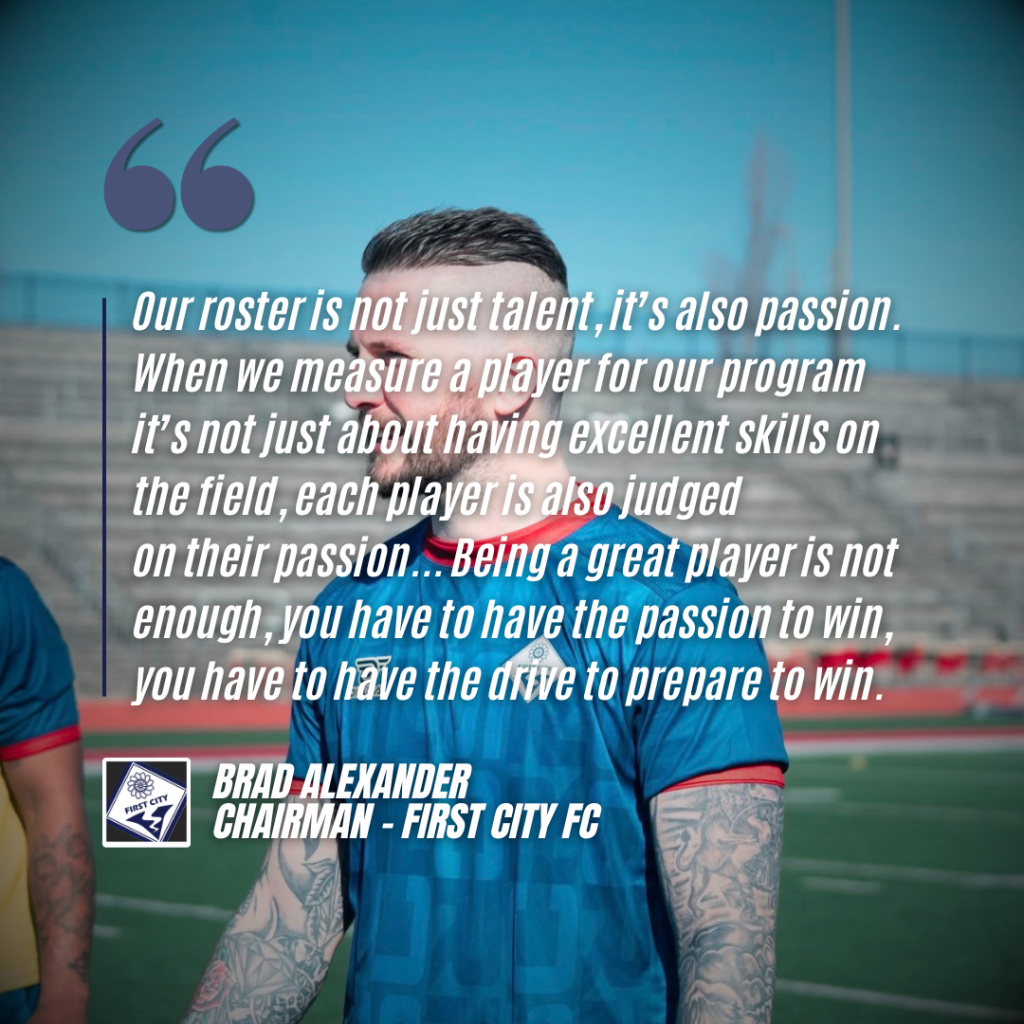
“When we measure a player for our program it’s not just about having excellent skills on the field,” Alexander said. “Each player is also judged on their passion. Being a great player is not enough, you have to have the drive to prepare to win.”

While rivalries have yet to fully form, Alexander pointed to Southside FC as a natural early matchup with emotional undertones, given player movement between the clubs. However, he also highlighted matches against Woodland FC and Great Plains FC as the most anticipated.

Those clubs, he noted, represent the highest competitive bar in the division, and the clearest measuring stick for First City’s first MWPL campaign.

Off the field, the club’s leadership structure is designed to support long-term growth, with clearly defined roles across marketing, sporting direction, and club operations. That alignment, Alexander believes, will be critical not just for Year One, but for the next phase of the club’s evolution.

“This inaugural season is going to be so much fun to be a part of,” he said, “but I can’t wait for the next five years to really put us on the map in the American soccer landscape.”

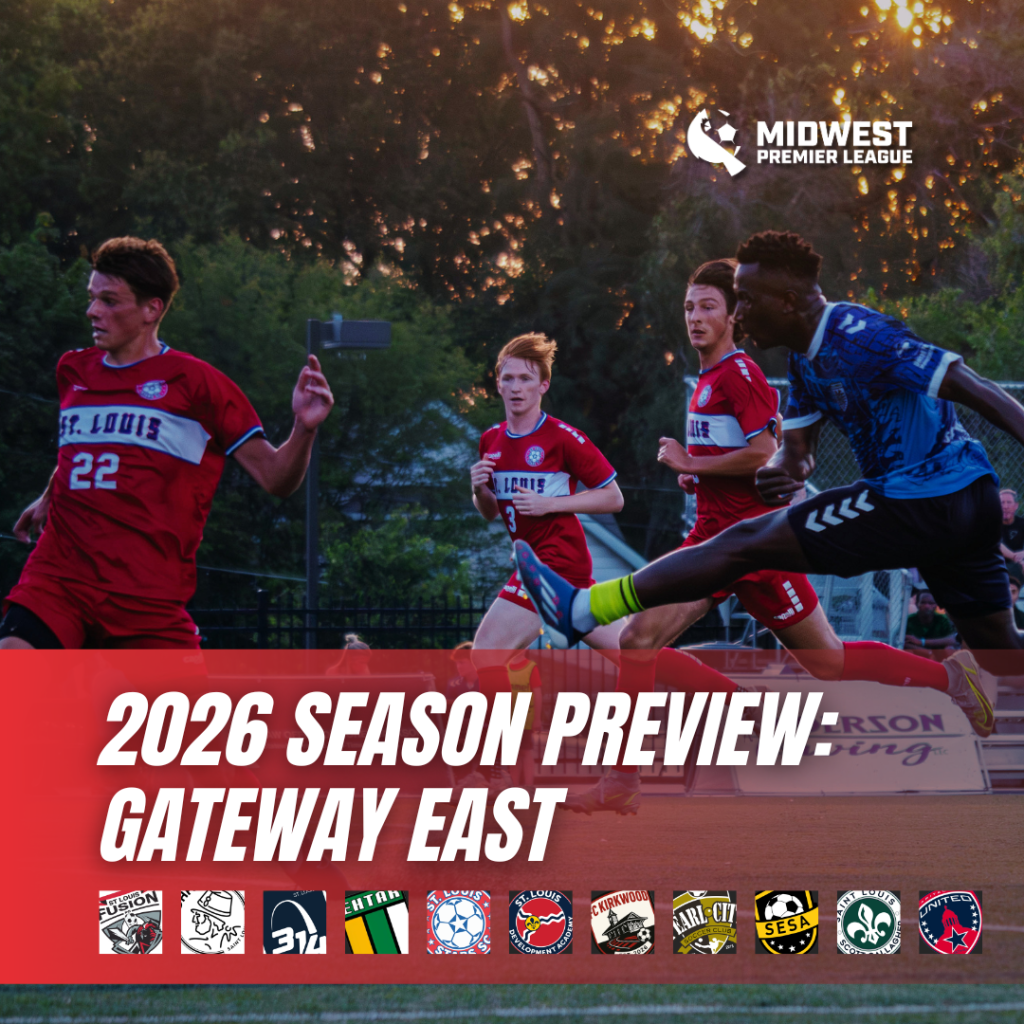
2026 Season Preview: Gateway East

A new chapter unfolds in the Midwest Premier League’s Gateway Conference, and nowhere does that evolution feel more immediate than in the Gateway East Division. With the conference now split into East and West, the East becomes a tightly packed battleground centered around St. Louis, where familiarity, proximity, and ambition collide.

This is a division defined by intensity from day one. Unlike other divisions, Gateway East is built on existing relationships. Most of these teams have already faced each other, studied each other, and, in many cases, circled each other on the calendar long before this alignment became official. Add in a handful of ambitious newcomers and returning Iowa sides looking to build momentum, and the result is a division where separation will be earned inch by inch.

At the forefront are last season’s top performers from this pool: Ehtar Belleville and BOHFS St. Louis, two clubs that set the competitive standard. Ehtar enters as the benchmark after finishing atop their division with 23 points and a +11 goal differential, returning Jermaine Mentoor, Yaya Nogenga and Adam Boykin among others. Close behind, BOHFS proved equally resilient, finishing with 19 points and establishing themselves as one of the most difficult teams to break down with a U.S. Open Cup appearance. Both sides now face the challenge of maintaining that level in a deeper, more demanding field.

St. Louis Stars SC and STL Development Academy return with something to prove. The Stars, who finished mid-table a season ago, showed flashes of quality but lacked consistency, something they’ll need to find quickly in a division that offers little margin for error. STL Development Academy, meanwhile, demonstrated competitiveness throughout the campaign, and their continued emphasis on player progression could make them a dangerous opponent capable of upsetting more established sides.

And then there is 314 Soccer Club, a team that may not have MWPL history, but arrives with momentum and identity. Transitioning from a successful UPSL campaign, 314 brings a strong returning core and a clearly defined philosophy centered on development. Their inclusion adds another layer of unpredictability to the division, particularly given their familiarity with several opponents through previous competition.

FC Kirkwood, St. Louis Fusion FC, and United Capital City Athletic each represent different shades of ambition within the division. Kirkwood taps into one of the region’s richest soccer pipelines, welcoming new players everyday. Fusion embodies the competitive depth of the St. Louis scene, while United Capital City offers a geographic outlier with the potential to disrupt expectations through cohesion and identity, all while competing at the Mid America Bank Sports Complex. In a division this balanced, even a small run of form could elevate any of these sides into contention.

No club, however, looms larger from a developmental standpoint than St. Louis Scott Gallagher. With a long-standing reputation as one of the Midwest’s premier talent producers, their entry into this divisional structure raises the overall standard. Their presence alone ensures that every match against them becomes a measuring stick.

Beyond the Missouri core, Pearl City SC and Southeast Soccer Academy carry the banner for Iowa. Pearl City enters after a respectable third-place finish in their division last season, showing both structure and promise as a youth-driven club. Their challenge now is building consistency against a more concentrated and competitive slate of opponents. Southeast Soccer Academy, meanwhile, endured a difficult campaign but showed late signs of life. There’s evidence that progress is underway, even if results have yet to fully reflect it.

What makes Gateway East compelling is not just the quality, it’s the compression. Travel is shorter, familiarity is higher, and every dropped point carries weight. There are no easy fixtures, no long adjustment periods, only a relentless schedule where momentum can shift quickly and narratives can change in a matter of weeks.

If other divisions are about discovery, Gateway East is about definition. Identities will be tested early, and only the most complete teams will endure.

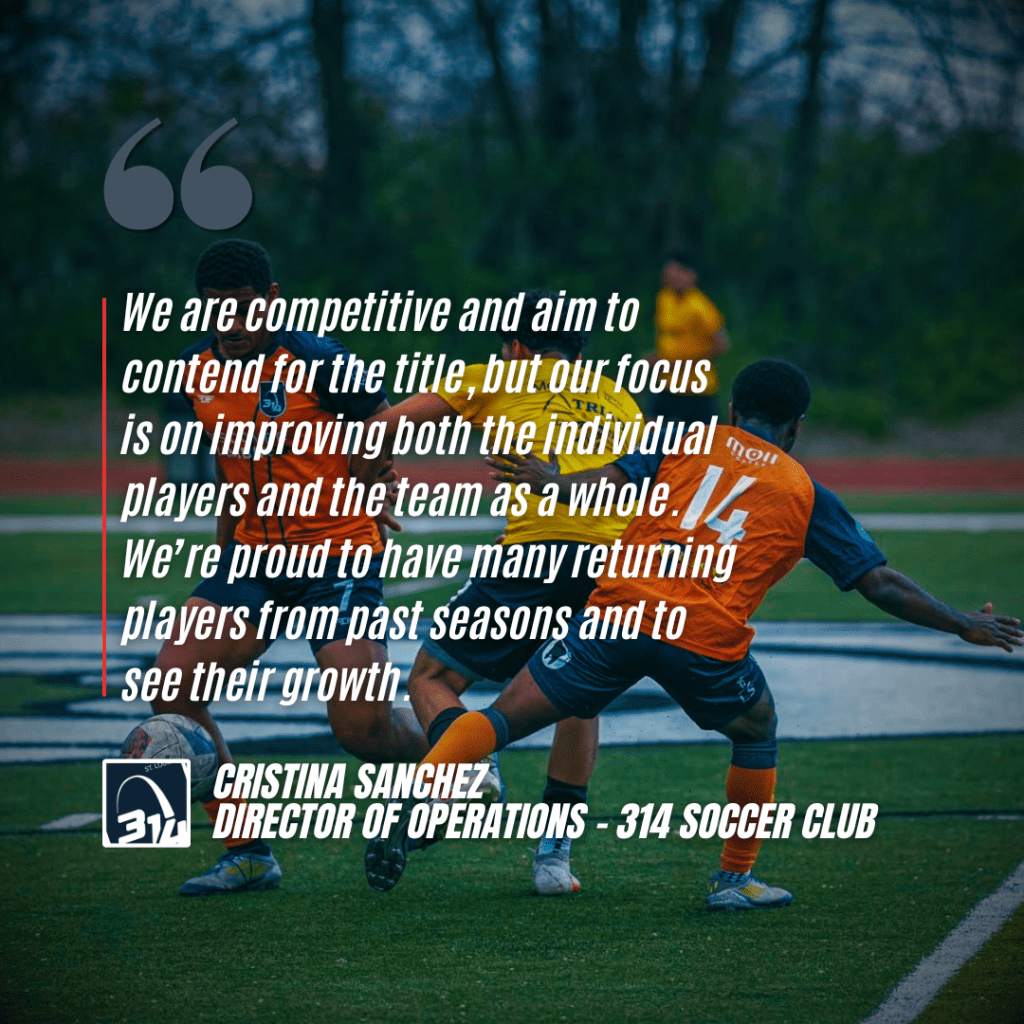
Feature Interview: Cristina Sanchez (314 Soccer Club)

If Gateway East is a division built on competition, 314 Soccer Club enters it with something just as powerful: clarity of purpose.

For Director of Operations Cristina Sanchez, the club’s identity has never been tied solely to results. “Our primary goal is player development,” she explained. That philosophy has been embedded since the club’s beginnings as a training academy, and it remains the guiding principle as they step into MWPL play.

That doesn’t mean ambition is absent. Far from it. “Of course, we are competitive and aim to contend for the title,” Sanchez said, but the emphasis remains on growth, both individually and collectively. It’s a balance that has already yielded tangible success, with players progressing to opportunities in Europe and Australia, reinforcing the club’s role as a pathway to the next level.

Continuity plays a major role in sustaining that vision. A strong core of returning players forms the backbone of the squad, while new additions are carefully integrated into an already established culture. Even departures are viewed through a positive lens. “We see them as success stories,” Sanchez noted, highlighting the club’s commitment to long-term player advancement over short-term retention.

That culture extends beyond tactics and training sessions. With a coaching staff that includes former professionals and individuals with MLS academy experience, and a locker room built on genuine relationships, 314 has created an environment defined by connection. “They’re not just teammates, they’re friends,” Sanchez said, a statement that speaks to the cohesion that often separates good teams from great ones.

Lessons from last season’s UPSL campaign have only reinforced those values. Discipline, communication, and commitment were central to their success, and they remain non-negotiable moving forward. “Teamwork is our number one priority,” Sanchez emphasized.

Now, the challenge intensifies. A new league, a deeper pool of opponents, and a division filled with familiar rivals await. But rather than viewing that as a hurdle, 314 embraces it. “The level of competition is strong,” Sanchez said. “We welcome that challenge.”

There are matchups already circled: renewed battles with BOHFS and Ehtar, and a particularly meaningful test against St. Louis Scott Gallagher, given the coaching ties between the clubs. But the broader mindset remains unchanged. Every game is an opportunity.

Motivation, in this environment, is not manufactured. It’s inherent.

“We’re not just focused on winning—we’re building something meaningful,” Sanchez said. “Our players believe in 314.”

In a division where margins are slim and competition is relentless, that belief may prove to be just as important as anything that happens on the pitch.

Midwest Premier League Welcomes River Light FC

The Midwest Premier League is proud to welcome River Light FC as the league’s newest member ahead of the upcoming season.

River Light FC will compete in the Heartland Conference, Division 2 – Group B, adding further depth and ambition to an already competitive conference.

“River Light is very excited to be able to join a league that has become so prolific in the Midwest. We can’t wait for the opportunity to compete for a true promotion battle this summer as we set our sights on getting into the first division,” said Chad Swieca, Owner of River Light FC.

With a focus on competitive growth and long-term progression, River Light FC aligns seamlessly with the Midwest Premier League’s mission to provide meaningful competition and a clear pathway for clubs to advance. Their arrival strengthens the Heartland Conference and sets the stage for a compelling Division 2 – Group B race this season.

The Midwest Premier League looks forward to welcoming River Light FC to the pitch this summer.

River Light FC Social Media
Instagram
Facebook
X


Midwest Premier League Social Media
Instagram
Facebook
X

The Midwest Premier League is an American regional soccer league run by its member clubs. The goals of the league are to focus on sustainability, the promotion of high-level competition between clubs, and the support of all of its members through the sharing of ideas and best practices. The league’s 2026 season will involve 53 clubs from 8 different states, including a promotion-relegation system in the Heartland Conference.

Interested clubs can follow this link for more information.
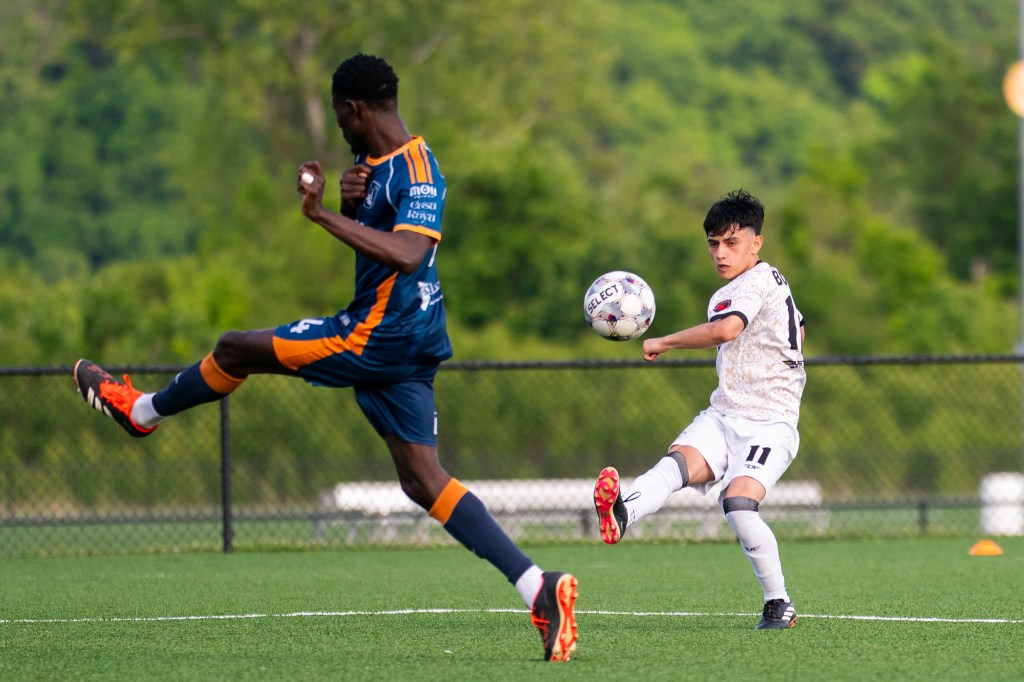
Midwest Premier League Welcomes JaHbat FC

The Midwest Premier League (MWPL) is proud to welcome JaHbat FC as the league’s newest member ahead of the upcoming season. The Illinois-based club will compete in the Heartland Conference, Division 2 – Group A, further strengthening one of the MWPL’s most competitive regional landscapes.

“JaHbat FC is excited to join MWPL and grow through a focus on player development, high-level competition, and a clear pathway to collegiate and professional soccer for our youth boys program,” said Kevin Francis, Director of Coaching at JaHbat FC.

The addition of JaHbat FC brings another ambitious and development-focused organization into the MWPL ecosystem, reinforcing the league’s reputation as a premier destination for clubs looking to compete, grow, and elevate their players.

The Midwest Premier League looks forward to seeing JaHbat FC take the field and contribute to another exciting season of MWPL competition.

JaHbat FC Social Media
Instagram
Facebook


Midwest Premier League Social Media
Instagram
Facebook
X

The Midwest Premier League is an American regional soccer league run by its member clubs. The goals of the league are to focus on sustainability, the promotion of high-level competition between clubs, and the support of all of its members through the sharing of ideas and best practices. The league’s 2026 season will involve 53 clubs from 8 different states, including a promotion-relegation system in the Heartland Conference.

Interested clubs can follow this link for more information.
Next Page »
Midwest Premier League

Quick Links

  • News
  • 2026 Schedule/Standings
  • Historical Standings
  • Clubs
    • Gateway Conference – East Division
    • Gateway Conference – West Division
    • Great Lakes Conference – East Division
    • Great Lakes Conference – West Division
    • Heartland Conference – Division 1
    • Heartland Conference – Division 2 – Group A
    • Heartland Conference – Division 2 – Group B
  • About
    • About League
    • League Leadership
    • League Partners

Other Links

  • Join the MWPL
  • MWPL Insiders Podcast
Privacy Policy
This website is powered by SportsEngine's Sports Relationship Management (SRM) software, and is owned and subject to the Midwest Premier League privacy policy.
Powered by SportsEngine